Monday, May 26, 2008

Glimpses

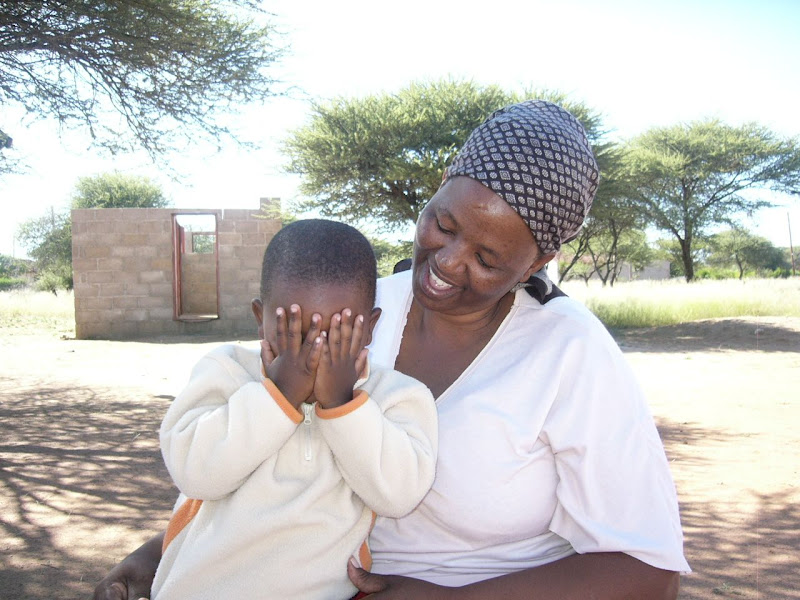
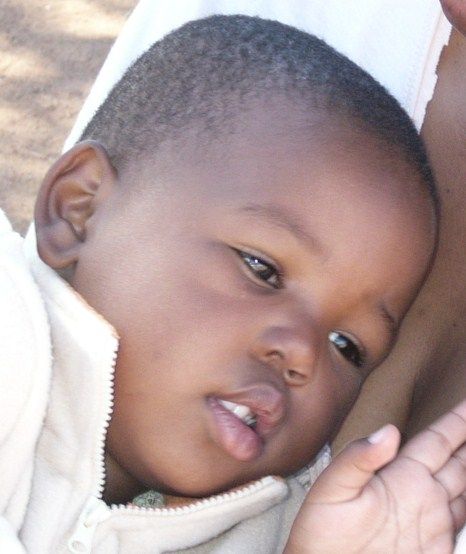
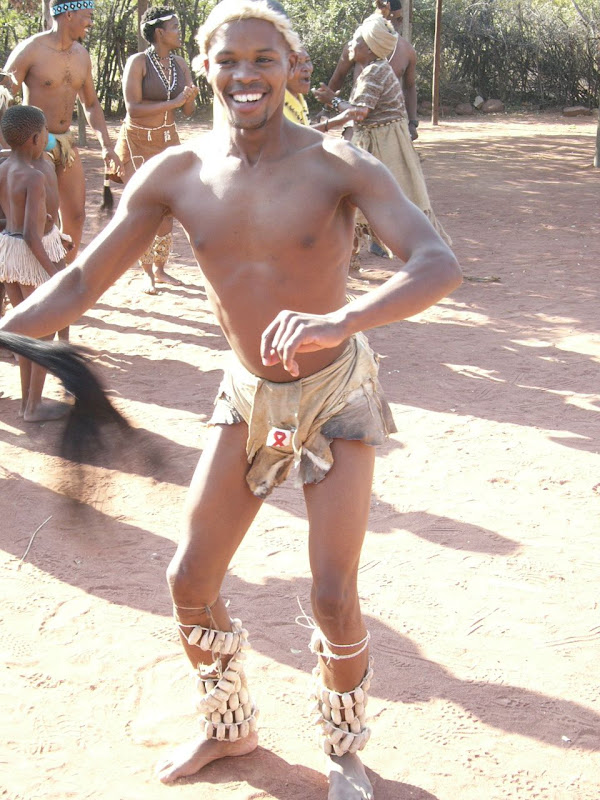
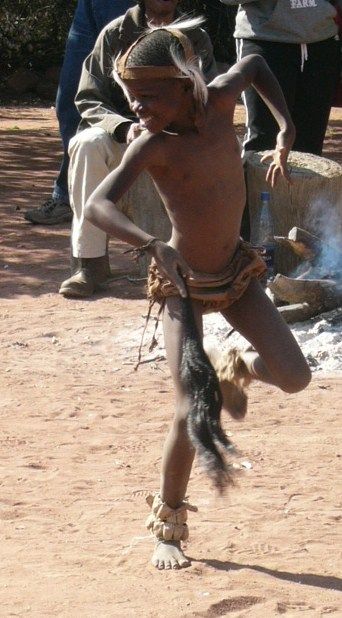
Since my internet time is limited, I can't upload as many pictures as I would like, but here are a few:


The boy who lives next to our training site:


Some dancers from a performance we went to:


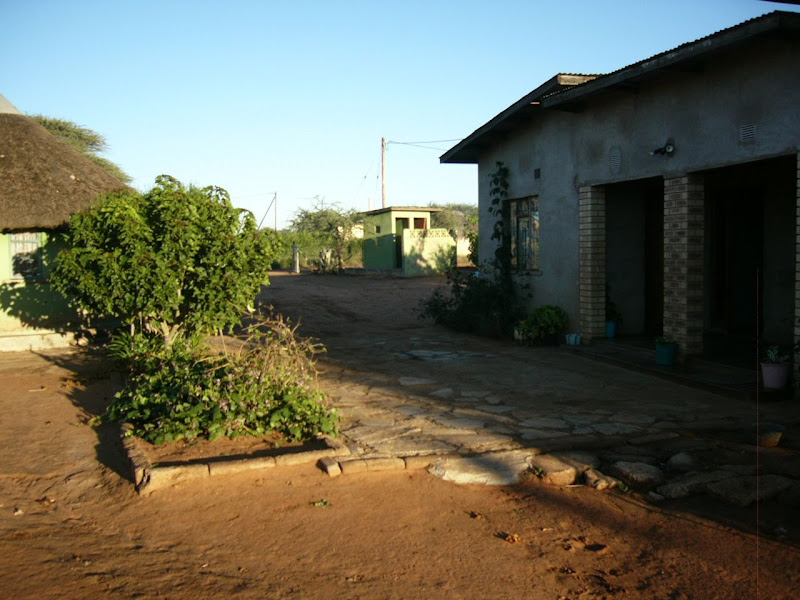
My home:


Ke ya lapeng.

“I want to go see Amerika.”

“You should come visit.”

“Is it true, if I go to Amerika, they will think I am a baboon or call me a chimpanzee?”

I’m still surprised by the things that come out of my Mme’s mouth on a daily basis. She’s an endless source of entertainment. She also tells me quite often how smart she thinks I am, and that she wants me to stay here for the next 2 years. She says she will cry when I leave.

Mme was supposed to volunteer at the church one Saturday morning. When I still saw her around at 8:15AM, I asked her if she was still going. I was touched when she said that she would rather stay at home with me. Later, during breakfast, someone called. I asked if it was the church, and it was. She told them that she is too tired and it’s too far.

Botswana television is continuing to be more fascinating. They have a version of American Idol called Botswana Pop Star that looks like it’s filmed in a high school auditorium, and there’s a Botswana version of American Bandstand that’s not half bad. On the other side of the spectrum, it’s still surreal to walk into the house and see Oprah’s on or the latest news about the American presidential race.

Honestly, although I appreciate the opportunity to watch the news in Setswana and hope I may absorb some language skills via osmosis, the TV issue is starting to bother me a bit. For starters, it’s always on. The family congregates around it, and they barely talk when it’s on. It’s like being a random American household. At first, I was in “assimilation” mode and thought I’d just continue doing whatever the family is doing, but now I’ve started initiating conversations to get the attention away from the television, and encourage more of my Setswana practice. Besides, isn’t the crazy white guy with silly broken Setswana much more interesting than the latest news on cattle herding or the diamond mines?

The other piece that irks me is I was looking forward to getting away from television for a while. I am in Africa, after all. I’ve been reminded over and over again, how completely difficult it is to escape American culture anywhere in the world. Mariah Carey and Black Eyed Peas spill from the speakers in the grocery store and the latest techno dance hits often blare from taxis. Then, there are the china shops. I still don’t understand why there is a significant Chinese population in the middle of southern Africa. Regardless, they sell DVDs for only P10 that have about 20 American films on each disc. One example is the “Matt Damon vs. Leonardo DiCaprio” DVD, which contains movies like The Departed, Titanic, the Bourne series, and Catch Me if You Can. Sure, they’re dubbed and the quality isn’t always great, but still, 20 blockbuster movies for only $2 is a good deal. I haven’t purchased any DVDs myself yet, but I have to admit, every time I’m invited to another PCVs house to watch a movie, it’s so easy to forego my homework or Setswana studying.

Some of my favorite times are when the power goes out. We light some paraffin lamps, and then I really get to have conversations with my family. Then there are the times when I simply plug in my laptop to charge and it overloads the circuit in our house. It’s just embarrassing.

The food situation isn’t getting any better, but I’m finding better ways to cope. I have a wide array of snack food that I eat throughout the day, instead of relying as much on my family meals. Every day is the same assortment of oranges, apples, peanut butter, cookies, chocolate bars, cheese and multi-grain crackers, which are the only “multi-grain” anything to be found. I also have an occasional mango, but winter is approaching, so delicious fruits, including oranges, are slowly disappearing. Soon, the produce sections will be filled with nothing but apples, of which I already eat 2 daily. It’s also a bad sign when foods in the States that I would normally think of as disgusting suddenly seem so appealing here. I almost can’t believe I actually bought that box of bacon-flavored crackers.

The first night we had pasta, I was thrilled, but then just disappointed. I felt like they were playing with my emotions. When I had spaghetti on my plate, and my family saw me eating it plain, I was told there was tomato sauce. I was filled with delight, but I couldn’t find it anywhere. I was relieved that my Mme couldn’t find it either, so I felt less incompetent. Then she exclaimed when she saw it in the refrigerator door. It was ketchup, with a label that says “Tomato – Sous.” I explained to them that in America tomato sauce is different, with onions, garlic, herbs, and tomatoes. This is too sweet. Botshe thata!

Everyday continues to be a surprise of bland food, the worst cuts of beef one can possibly imagine. There was even a day when all we had was bread. Just bread. No butter. No peanut butter. No jam. Just… bread. It was odd and saddening. I’d also be happy if I never saw beetroot, bean leaves or phaleche again. I really do love my family, but I can’t wait to have my own place with my own meal choices and food options.

I talk a lot about the food, but it’s not all bad. There’s a spicy sausage, boroso, that is delicious, and my taste bud come to life every time we have it for dinner, which is at least once every week. The first time they asked me to cook with it, I got a bit creative, mostly because I was doing a horrible job cutting it. The meat was falling out of the skin of the sausage, and it looks just like ground beef when it’s raw. I decided to make meatballs. I mixed the spicy meat mixture with a pinch of salt and sugar an egg, and a large handful of crumbled cornflakes. I made a little sauce from onions, tomatoes and green peppers to go with it.

They were delicious. “Dijo di monate,” Mme said, impressed and fascinated by my invention. As soon as she was finished eating, and pushing her side dish aside to save it for tomorrow, she got a small notebook and insisted on getting the recipe for these meatballs. She very carefully wrote down how to make them step by step. This led to a small recipe exchange between the two of us. She asked for the recipe for the home fries I made the week prior, and I got the recipes for her biscuits and her samp and bean mixture. It was another one of many heartwarming moments with my host mom.

Another evening, as soon as I sat across from her in the living room, she randomly asked me, “How many goats do you and your family own in Amerika?”

“Most people in America do not own goats,” I tried to explain.

“How many cows?”

“Most people in America don’t own goats or cows.”

“Ehee…”

“In America, only famers own goats and cows. They have many of them, and it is their entire job…”

In Botswana, the number of goats and cows your family owns is a sign of wealth and how much money you have. Most families own some form of livestock here, but they spend most of their time in some unbeknownst field grazing, or at the cattle post. It’s also common for the scrawniest or worst fed livestock to be slaughtered because the bigger animals are a sign of greater wealth, and therefore, families don’t want to get rid of them. If one of your goats or cows die, or worse, are killed, it’s a big deal. I learned firsthand just how angry some family members can get when this happens to them.

On one Tuesday morning, after I got dressed, I heard a dog barking violently. As my brain awoke, I noticed the barking was very near to my room. I opened my curtains to see a disturbing sight right outside my window. In partial disbelief, I saw my two youngest host brothers, smiling and laughing as they held long metal rods aggressively beating a dog. One of the neighbor kids walking by decided to help in the cruel process by throwing rocks at it. I heard stories about things like this happening, but it was quite different to see it 10 feet away from me.

I wasn’t sure what to do. I restrained my temptation to run out and start yelling at them and insisting they stop their irrational act. It’s part of the culture, I suppose, but my God, what cruelty occurring right before my eyes!

I calmly walked out of my room and saw Tebo, the elder brother, standing on the porch, smiling, enjoying in the fresh air of the morning, as if nothing unusual was happening on the other side of the house. I asked if he knew they were beating a dog and whose it was.

“Yes.” And continued smiling, staring into the distance… enjoying the fresh air of the morning…

“Why are they beating it?” I asked

“A dog killed our goat,” he said blankly

Ok… “A dog” killed their goat, not this dog, but “A dog?” I tried to understand by asking questions.

“Whose dog is it they’re beating?”

“We don’t know.”

“If it’s not even the dog that killed your goat, what is this solving?

“eeh?”

“How is beating the dog helping?”
“eeh?”

“Why are they beating the dog?”

“A dog killed our goat.”

I wasn’t getting anywhere. At this point, the dog ran across the front of the yard and the two younger brothers chased it. It then ran to the porch where Tebo and I were standing. It sat in the corner, all legs intact, not limping at all, but a deformed body of broken ribs, and trembling in both pain and fear.

I asked Tebo very slowly, “Ok, what are we trying to accomplish here?” waving my hands dramatically.

“We want the dog to leave our yard.” I turned my head to see the open gate. “Oh! Ok, let’s try to make this happen.” Tebo grabbed the dog by the collar, but it was terrified and just dug its paws into the grounded. In about 5 minutes, it left the yard with no more beatings. I have no idea if it survived the countless internal injuries it probably withstood.

I still almost couldn’t believe this happened right in front of me. Rather than be seen as the crazy white person who likes dogs, I opted to calmly figure out how to solve the problem. I suppose if I were in my village, I would have done the same thing. I’ll already stand out in a number of ways, I don’t want another one. If this were the States, and any other injustice, big or small, were happening in front of my eyes, I would have reacted differently. I don’t know if I did the right thing by letting the beating go on for a few more minutes, but I do think I did the right thing about inquiring for reasons before violently berating a seemingly common occurrence in their culture.

I’ll never forget that image of them smiling and laughing as they committed this horrendous act. I certainly learned how important goats are and uncared for dogs are. They’re meant to protect your property and herd your livestock, but if they kill one, something went wrong.

Despite the dog incident, Batswana are a kind, gentle and soft-spoken people. I’m reminded of this when I’m talking to people in town, interacting with our trainers and greeting people during my 30 minute walk to our training space every day. I even got lost in my neighborhood after dark once. I left another PCTs house a bit late and the sun was setting. Most people don’t go out after dark, and there are barely any lights anywhere. And there certainly are very few roads, and no street signs anywhere. Everything is a maze of yards, fences, compounds and sandy pathways.

I made a wrong turn on my way home that night, and the moment I turned around to retrace my steps was the moment the sky seemed to have suddenly turned pitch black. I could barely see anything. I started to call someone, but then discovered I was out of airtime and could make any calls. Then it occurred to me, even if I did get a hold of someone. What would I tell them? In English or Setswana, I couldn’t tell someone where I was or where I live. House after hut after yard after herd of goats and flock of chickens all looks the same. There are no streets or addresses, just the maze.

I eventually gathered my bearings and just kept walking in the same direction until I got to one of the main roads. From there, I knew which direction to walk, so I just continued walking until I saw a familiar shape of a house. 30 minutes later, I was home.

It was a frightening experience at the moment, but I was reminded at the time of what a safe place I’m currently living in. I saw several people on my wandering journey in the dark. There wasn’t a single moment that I gave anyone the impression that I was lost. Again, what would I say? I don’t know where I am or where I live. I could have told someone Ratlalape, and perhaps someone would have recognized my family’s surname. At any rate, everyone I talked to were very friendly per usual. Dumela after Dumela my nerves were settled and calm as I was reminded of how kind and gentle the people are. This is all the more reason why incidents such as that morning with the dog are so confusing and surprising to me. I truly love the people here, and my neighbors are some of the main reasons I like my village so much. However, there are a number of situations such as the dog incident that still boggle my mind.

---

I had my interview for Site Placement last week. It was simple and non-eventful. In the grand scheme of the process, my preferences are quite simple. They asked me to list my 5 preferences in priority order, and I only have 2. I’m open to the rest. I made the un-stereotypical Peace Corps request that my housing have electricity and/or gas because I realized how important cooking food is to my well-being. For the NGO, the only preference I made is that I want to be placed with an NGO with a Counseling program. Years later, I still crave to do Counseling work as a profession. Working as an Organizer with an NGO that has a Counseling program seems like the perfect cross-over between my previous career and where I still long to go in my career.

On Saturday, I’ll find out where I’ll spend the next 2 years of my life, and with what organization.

Emelela ko Charleshill

Embracing the bitter cold at 3:16AM, I begrudgingly got out of a bed. Speaking to my host family the night before, they knew I would be gone for the next five days and that I had to be up very early the next day. Per usual, they made me a lunch. I also hard-boiled some eggs, and packed some other snack food for the long bus ride.

As I was gathering my things makuku thata that day, I discovered the doors to the house were locked. Since my bedroom is in a separate corner, I couldn’t get in. I tried to think of creative ways to break into the house, but I couldn’t find any. Every window is covered with burglar bars and the doors have strong deadbolts. This certainly made me feel even safer in my housing situation, but it wasn’t helpful for the matter at hand. I walked around the house and noticed that Bami’s light was still on, even though his loud snores told me he was asleep. I opted to wake him up.

“Bami…”

“…Bami…” I whispered

After waiting for a response, I then yelled, “BAMI!” after which I heard some rustling and some incomprehensible noises of post-slumber pains.

“It’s Kabo. Dijo tsame in the kitsi.”

He let me in the kitchen so I could get my food. Promptly after that, the khombi arrived to pick me up, and one by one, we collected 8 other PCTs (Peace Corps Trainees) with the early crowd.

After we gathered everyone, it took about an hour to get to Gaborone, just in time to wait for the 6AM bus to Ghanzi. Getting on the bus wasn’t as much of a battle as we anticipated. We were prepared to push people out of the way as the concept of a “queue” in Botswana doesn’t exist in most contexts.

Getting on was no problem. I was actually surprised and impressed by the minor luxuries that occurred over the next several hours. It was a coach bus that was nicer than any Greyhound I’ve ever been on. There were also venders walking up and down the aisles selling stuff: sweets, newspapers, milk and even cell phone minutes.

(Sidenote: in Botswana, one doesn’t pay per month of cell phone usage. You pay for exactly what you use. Therefore, people buy “cards” with a certain amount of money on them: airtime. The cards come with a code that is typed into the phone for use. Also, you pay for every call you make, but it costs nothing to receive calls. Hence, it’s common for people to always answer their phones, even when in meetings or speaking to a group of people. It hasn’t been too annoying… yet.)

Once we got moving, in our dreary states of being, we began to see a different landscape of desert, bushes, sand and succulents. This would get old after 30 minutes though, as the scene repeated for 10 hours. This also isn’t a route where one sees much wildlife. So we weren’t seeing the giraffes, lions and zebras of quintessential Africa. They’re mostly in the Kalahari Desert and Okavango Delta, north of us. Nonetheless, it was nice to see a different part of Botswana.

Since the bus was crowded, all seats filled, and many folks standing in the aisles, the main discomfort were the number of people squeezing through, up and down the aisle. Unlike most American forms of transport, where one pays before you board, we paid our bus fare en route to our destination. A bus attendant went seat by seat collecting our fares, and also keeping track of those standing in the aisles since the bus was packed full. It cost P77 each way, approximately $16. We also had a few stops along the way. On our first stop, there were several women selling fried chicken, fries, water, and other unhealthy nourishments. It still wasn’t the type of convenience I was expecting, and they certainly weren’t hassling us either.

Windows are apparently a big issue to battle over on the bus. Batswana thinks they’ll get the flu from the wind coming in the window, so it was frequent that someone else would ask us to shut our windows, even when it was hot. There are a series of irrational thoughts like this that lead me to believe they’re severely lacking some basic biology and chemistry education.
1) There is little understanding of how any illness is spread.
2) There are misconceptions on how HIV is transmitted even after they’re taught.
3) Soap is rarely used when washing their hands.

On our last stop, I was waiting in line for the pit latrine when I heard Pedro calling for me from inside the stall. “The door won’t open. I’m stuck in here.” I noticed that there were no handles or doorknobs on this old piece of orange-painted wood. It wouldn’t unlatch, and we were trying to figure out how to get him out. I then saw the large rock on the ground which is probably used to keep the door closed without fully closing and latching it. There was a hole where a handle would be, and we tried everything from knives, pens and keys to try to turn it and unlatch it but nothing would work. In the end, I hoisted myself up on the wall behind me and kicked the door down as Pedro guarded himself on the back wall.

After 10 hours on the bus, we reached Ghanzi in the western part of the country a little after 2PM. We met up with three PCVs (Peace Corps Volunteer) and split up into 3 groups to continue the next leg of our journeys. Antonia, Kate and I met up with Monica, the person I would shadow for the next few days. Monica was able to get one of the ambulance drivers from her clinic to drive her up to Ghanzi and take us to our sites. Otherwise, she would have had to hitchhike, and we would have had to do the same. There’s no other option for public transport. You either ride with someone you know or hope someone driving in your direction will give you a lift.

Monica lives in the town of Charleshill, which is 2 hours west of Ghanzi, a major village. Since she doesn’t have a grocery store where she lives, and it’s rare for her to have reliable transport, we went to Spar and stocked up on a lot of food. Monica once ran her own catering business, so I was already looking forward to all of the great food we would cook in her home.

As we left the grocery store, we saw several children begging for money. They would hold up one finger, rub their bellies and ask for money, one pula. The strategy was consistent, and I remembered all of the children we saw when we got off the bus. “Ga ke na madi” we would tell them. If we even gave them just a few Thebe children would swarm us asking for more money. It would also serve as an incentive for those who are school-age not to go to school. The other ridiculous and sickening part is the Botswana government provides a large number of welfare and socialist programs: food baskets and financial assistance for poor families, universal health care, and an extensive infrastructure of orphan programs. Botswana is one of the countries that doesn’t deal with issue of malnutrition, because, for the most part, its people are well-fed. Parts of the problem are that many people don’t know the programs exist or how to access them. In the saddening rationalizations of picking and choosing your battles, these weren’t kids that we could help.

We met up with another PCV, Leah, and the 5 of us went back to the khombi. Since the ambulance driver was taking us, and it’s a government vehicle, we had to go to the government office to wait for a paper to be signed, approving the use of the vehicle. We waited for well over an hour, chatting in the parking lot, until someone was able to sign our form so we could go on our way. This was only the beginning of formulating my understanding of how difficult transportation can be and how flexible one has to be in order for it to work out. By this time, it was 5:30PM, we had been up for 14 hours, the sun was starting to set, and we had a few more hours to go.

We drove an hour and half west to Karakudis to drop off Antionia with Natalie. From there, we went on for another hour to Charleshill. Outside the windows of the khombi, the same repetitive landscape whizzed by, but clouds were starting to form. Suddenly, an illustrious thunderstorm was lighting up the sky in the distance, probably one of the last rains before the dry season. Kate and Leah stayed with us for the night, and then went on to their final destination of Kule in the morning.

Charleshill is a small town with a population of about 1500 people. Despite its size, it’s the hub of the southern sub-district, consisting of 10 villages, and part of the greater district of Ghanzi. It’s only 8km from the Namibian border, and it’s the only official border crossing between the two countries. There are three non-Batswana tribes who live in the area, and many of them don’t speak the national language of Setswana. Although Setswana is still useful, and most folks speak it, there are also the dialects of Sasarwa, Saherero and Sakgalagadi.

Monica is part of the CCB (Community Capacity Building) program, one of four Peace Corps programs here, the others being Life Skills, DAC (District AIDS Coordinator), and my program: NGO (Non-Governmental Organization) Development. All four programs focus on HIV/AIDS in some way. Most folks in CCB are partnered with a clinic and work with the PMTCT (Prevention of Mother to Child Transmission) Program.

All people in Botswana who are diagnosed with AIDS, HIV+ pregnant mothers, children and many other categories of HIV+ people receive free ARV (Anti-RetroVirals) medication through the government. It’s revolutionary in the since countries such as the U.S. don’t even provide such a program, leaving folks in the U.S. who are HIV+ with huge medical bills.

In addition to the ARV program, PMTCT provides education and other resources to help mothers who are positive not transfer the virus to their child. The highest rate of transmission is during childbirth. After that, there is a 5%-10% chance that a child can get the virus through breast-feeding. PMTCT offers positive mothers free formula as an alternative to breastfeeding. However, there is a 5%-10% chance of infant mortality through this method since some mothers do not prepare the formula properly, do not have access to enough formula, etc, and many children pass from diarrhea or other form of malnourishment. With the infant mortality rate equal to the HIV transmission rate, one can easily see where controversy arises.

One challenge of the program in this area is the non-Batswana tribes such as the Baherero who don’t believe in western medicine. It’s just one of several reasons that people don’t take advantage of this or other HIV programs.

I spent the next few days getting to see some of Monica’s work, but mostly, I had a lot of time to finally relax a bit. Morning staff meeting at the clinic consisted of a short song, a brief prayer, and a 1-minute information-less exchange. I was lucky, apparently, since the morning meetings are usually very long, tedious, and entirely in Setswana.

I got to see Monica teach two different classes, one sex education class at a primary school and a computer class at the middle school. Trying to solidify the school schedule and find out when the computer class was proved to be a bit of a challenge. Monica teaches on Day 2. The Botswana school system operates on a 6-day schedule that sometimes include Saturdays, sometimes not, does not include Sundays and skips on holidays. Mondays, for example, could be any of these days, depending on the week. This was the third day in a row that she thought it was Day 2. The students who were outside showed us their schedules to affirm for us that today was indeed Day 2. We were quite confused, however, when we walked into the computer room and there was a teachers meeting taking place.

After we left and talked to one of her teacher friends, we confirmed that it was Day 2, they know there is a computer class, but there’s also a meeting. One would think that a meeting can happen anywhere, but a computer class has to happen in a room full of computers, but they wouldn’t move the meeting. Instead we taught off of broken typewriters and pictures of keyboards. Flexibility and patience continue to be important virtues in Botswana.

With both classes, I was impressed with how smart the kids were, how friendly they are, and how attentive they seemed to learning. I was also touched that a couple of kids in the computer class, asked me to come over and help them several times. It was heartwarming.

The most important part of my journey, sincerely, was food. We baked up a storm, cooking pita bread from scratch, making pastas, veggie curries, baking chicken and blending random yogurt, fruit and oat concoctions for breakfast. I was dying for delicious food. I also didn’t realize just how much the food situation was affecting my mood until I had so many options in Monica’s kitchen, and time/space to cook. It was more than just my mood, but my ability to think clearly, process and brainstorm ideas. It was a genuine moment of Maslow’s hierarchy of needs playing out in my life.

The journey back to Molepolole was uneventful. I was sad to leave Charleshill, but not as sad as I was to have to return back to training.

Prior to my journey to Charleshill, witnessing a sample of life as an actual PCV, I was having the ubiquitous doubts of the decision I made for my life. Why am I here? Why am I in Peace Corps? Why am I in Botswana? Why didn’t I take one of my job offers in the States? Did I make the right choice? Am I going to make the most of the next 2 years? Are the next two years going to help me personally and/or professionally? What in the world am I doing in Africa?

Having time away from my host family and training gave me the time and space to reflect that I’ve been needing. I felt more confident in my decision to be here, remind of the multiple directions I could see my life taking in the future and how my time here furthers all of my options. I know I’ve wanted to do this for years. This is exactly what I asked for, and it hasn’t even started yet.

Overall, it was helpful to see that there is life after training and living with a host family. They both come with a huge number of positives, but they also come with a bit of restraint on personal freedoms. I’m so eager to get to Site, find out where I’ll be working, what I’ll be doing, and officially begin this working experience.

Monday, May 5, 2008

Dumela!

My palms were sweaty. I was nervous. We were all nervous. Perhaps we wouldn’t have been if it weren’t such a big display. It was Day 1 of our Batswana life. Once we were paired with our host families, we would begin to immerse ourselves in Batswana culture.

Voices echoed in the hall, folks from Botswana on the right singing their national anthem, followed by the Americans on the left singing ours. Though no one warned us we would be asked to sing, we did pretty well. Over 120 batho, Peace Corps trainees and representatives from our soon-to-be host families filled the room of the secondary school in Molepolele, the town in southern Botswana where we would reside for the next 2 months of training. After listening to speaker after speaker, they began to pair us with our host families.

What do we say? How do we greet them? We’ve only had two days of language and culture training. Would we shake hands in the respectful way? Will they be friendly? Will they like us? Will my home have electricity? Will I have siblings?

The first host family mother stood up after her name was called, and then they called out the Peace Corps trainee’s name. They approached each other in the middle of the room, with big smiles on their faces. He shook her hand, and she immediately gave him a big embrace, hugging him enthusiastically.

Pair after pair were united for the first time, creating our Batswana families. Each time, the armspan of each Motswana seemed to get wider, joyful hug after joyful hug.

I was thrilled to meet my host mother and begin speaking with her over lunch. She speaks a little English, which was certainly helpful with my minimal knowledge of Setswana. We were informed that our host families would give us our Tswana names, but I didn’t expect it to happen so quickly. My Mme was almost bubbling over with excitement to tell me my new name.

“Your Setswana name is Kabo.”

“Tahbo?”

“Kabo. K… A… B… O… Kabo.”

“Kabo. What does it mean?” I asked, thrilled to have my name so soon.

“It means gift. You are a gift to our family and to Botswana.”

I could have cried in that moment, but I restrained from even tearing up. It was an unexpected emotional moment. This woman would be my host mom for the next two months, and soon introduce me to the rest of my host family. She said that she has 4 sons, 2 of which live at home with her in Molepolole, and the other 2 who live and work in Gaborone (the capitol).

I used the little Setswana I knew as I conversed with her. She was impressed and telling all of her friends “O itse Setswana.” “He knows Setswana.”

As we were standing in line to get food, she turned to me and asked “Do you drink?”

“Do I drink?” I looked at her, a bit perplexed.

“Yes, alcohol. Do you drink?”

(uh… If I lied and said no, that might disrespect their culture somehow? What if alcohol is a normal part of Batswana life or some daily ritual? If I say yes, does that mean I’m a drunk? No one warned me of this.) “Yes… a little.” I said cautiously

This was the moment she brought up her husband. I think she told me he drinks. Was she trying to tell me he drinks a lot? That he has a drinking problem? I found out later that in Botswana, you either don’t drink at all or you’re a drunkard. Great. Thankfully, this issue hasn’t come up since, and my Mme doesn’t think I’m a drunken fool.

My host father, I soon discovered is a taxi driver, and not a drunk. He picked us up from the school, and we were on our way home. Since he doesn’t speak any English, we didn’t converse much, and I absorbed the somewhat foreign landscape outside my car window, and the hoards of Africans walking everywhere.

On our way home we stopped at the grocery store, Choppies. Surprisingly, no one stared or pointed as I walked around the store with my Mme, no other non-black folks in sight. The store was filled with most anything one would expect in an American supermarket, only fewer options. I would soon become very thankful for the stops we would make to Choppies and Shoprite after training sessions, so I could stalk up on every form of chocolate I could find and hoard it in my room.

Since my Ntate is a taxi driver, we picked up and dropped off 2 people after the grocery store. After paved road, to dirt road to sand-filled driveway and yard, I arrived at my new home. With 3-bedrooms, un-insulated concrete walls and a corrugated tin roof/ceiling, it almost resembles a house one might find in the depths of the poor South of the States. Considering this is Africa, I thought it was fairly nice.

After I dropped off my luggage in my room at the corner of the house, I stepped into the living room to meet two of my host brothers, Tebo and Bami, 20 and 16, respectively. They were watching television. Yes, not only do they have electricity, but they have a TV and a DVD player. After some brief conversation, they asked if I liked pop music, as Tebo held an unidentified DVD in his hand.

It was Celine Dion. They made me watch Celine Dion videos. My first time in an African household, and I’m forced to watch Celine Dion videos. Is this really happening?

I asked one of them “O rata Celine Dion?” You like Celine Dion? Yes, they do, they really like Celine Dion. Over the next hour, I would discover they know a lot more about contemporary American pop stars than I do, not to mention how up to date they are on pro-wrestling.

Tebo lives and works (as a security guard) in Gaborone, and was only visiting in parents over the next few days. I was sad when he went because I spent most of my time in the house with him, learning bits of Setswana, and becoming accustomed to my new day to day life.

Basic activities such as bathing become an entirely new experience where a series of questions needed to be asked to know exactly what to do. There’s no running water in the house. The “toilet” is a pit latrine (outhouse) on the west side of the yard. The first time I was about to walk out to the “bathroom,” Tebo pointed to my naked feet and said “pata-patas.” I understood what he meant, and as I was already planning to do so, I grabbed my flip-flops. I explained to him that they are called flip-flops in America because of the sound they make when you walk. He laughed and informed me they call them pata-patas for the same reason. Every time I walk, I can hear “pa-ta, pa-ta, pa-ta, pa-ta” and it makes a lot more sense than “flip flop.” Pata is also the name for the dirt roads.

There’s a spigot outside next to the house where all of the water for drinking, cooking and bathing is collected by bucket. For my bucket bath, I gather water, pour it into the family’s largest cooking pot, and take about 20-30 minutes to boil it. This will be the hot water for my bath. I then carry a large metal tub to my bedroom, pour in the boiling water, and then gather more (cold) water from the spigot to bring the metsi to its desired temperature.

From bathing to cooking to washing clothes, everything is a process. It’s not the luxury of having a machine or indoor plumbing do most of the work for you. But it’s a simple lack of luxury, really the luxury of time.

As I begin to unpack a bit and get settled in my temporary home, I start to notice the items on the wall. It’s clear my room used to belong to the eldest child, Billy, 24. There are Botswana flag stickers and magazine photos of American musical artists adorning the walls, including Black Eyed Peas. There are also the Zebras, the Botswana football team, random family photos, and most interestingly a piece of notebook paper that reads “The World of Design” next to some sketches of dresses.

Following in the footsteps of his Mom who works as a seamstress and designer in her own textile shop, Billy went to school for Design and wants to make and design clothes. Since he lives in the capitol, I haven’t met him yet, and I’m not sure if I will. The fourth brother, kgosi, is 11. I finally met him a few days after I arrived. He’s adorable, but a bit shy, so he doesn’t talk much.

The brothers who live here have been extraordinarily nice, sweet and kind. They cook all of the meals, boil my water for me and even prepare tea. (Sidenote: As a former British colony, tea time is quite common. We even have tea breaks twice a day during our trainings.)

The second morning I was here, I walked into the house to find Tebo pacing in the kitchen. Apparently he was waiting for me, because as soon as I walked in, he immediately looked up at me and said “I make tea for you.” Being treated with such hospitality as a guest has been nice, but it certainly took some getting used to, and led to some awkward moments.

One morning, I headed to the kitchen, looking forward to making myself some eggs and eating some bread with it. I walked in to find that Bami had made some peanut butter sandwiches with the last of the bread. Dammit! But one of them was for me. Yay! Except, it was a bit early for peanut butter according to my tastebuds. Oh, well. I went with it, made some eggs and had a peanut butter sandwich with it. Then, halfway through my meal, Bami prepared himself a bowl of cornflakes. He pointed at the bowl and said, “This is for you.” Um… “Ke a leboga.” Thank you. Far too much food, but I couldn’t turn down the gift.

As part of the agreement between the Peace Corps and the host families, every week, the families are provided with food baskets to help them to supplement an extra person in the house. The Peace Corps also helps to pay for some of the electricity and gas. Since we’re not expected to pay for any of the food, and the fact that they prepare everything for me, I’ve compromised my tastes for the service. I thought Botswana food was tasty, but after day three it got old. There’s no spice or flavor, everything tastes bland, and since it’s a landlocked country, there’s no ethnic influence of food from other regions of the world. If I wasn’t so exhausted after an hour of walking and a full day of training, and if the family didn’t offer to cook so much, I would probably do my own cooking, but again, it’s a compromise.

One evening, I decided I wanted to make some french fries. I was at a point where anything fried just sounded completely and decadently delicious. It was a bit of a disaster. I put a lot of oil in a pan, but the potatoes just kept sticking. I miss Teflon. I’m a spoiled cook. I salvaged it by adding some onions, turning them into homefries and making some eggs with onion and tomatoes to go with it. This was a night that I opted forego the family meal and make my own food.

Meanwhile, we usually eat around 8PM, pretty late by Botswana standards, but that’s when my Ntate usually gets home. He doesn’t speak any English, so our interactions are quite limited outside of “Dumela, Kabo. O tlhotse jang?” After we ask how each other’s day went, it ends there. However, this evening, he and the rest of the family were so intrigued by my cooking, so they insisted on having a small side of eggs and potatoes with their meals. Halfway through eating his meal, my Ntate, ate all of the food I prepared, started scavenging off of his wife’s plate, and then gave the rest of his Batswana meal to the dogs. It was one of our finest bonding moments. He started acting goofy after that and asking if we could take family photos. Despite the language barrier, we still communicate, he smiles a lot, and we get along. I look forward to the day I can learn more about him by actually speaking more Setswana.

Since my Mme actually speaks a little English, we’re sometimes able to have deeper conversation. One particular conversation, however, was a bit challenging, and then turned awkward. I tried to ask her how she met him, but she didn’t understand. I rephrased the question in several ways, including, “when did you first meet him?” but that still didn’t. I then thought about how important greeting and saying hi to each other is here, so I asked “when did you first greet (Dumela!) him?”, still drawing a blank.

“How did you come to know him?” I asked. She laughed a bit and I thought, “maybe she finally understood what I’ve been trying to ask. Then she said, “During the night.”

Awkward silence.

I think she thought I was asking when they have sex. Moving on, I don’t know how I eventually got her to understand my originally question, but I brought her back. In her limited English, I still didn’t get very much beyond the fact that she used to be very shy, he quasi-stalked her, and suddenly they were engaged. All of that took about 15 minutes, and “during the night,” is not what I was going for.

We did, however, have a substantial and interesting conversation on another evening. She was flipping through a magazine and looking at car advertisements. I asked, jokingly, if she was buying a car. She laughed and said they don’t have the money, then asked if I own a car. I half-lied. I told her I don’t, because I don’t have the money. I truly don’t own a car in the States, but I had money for one. I went on to explain that I worked for a National NGO. I like to do work that I love, but NGOs don’t pay very much, so I walk or take the bus. She told me that most Batswana think all Americans or rich. I’m glad my point of breaking a stereotype got through, however, it’s still true that the poorest of us in the States still have more financially and in terms of options compared to those anywhere in Africa, even in developed Botswana.

The first few nights I was here, I wore my “2004 AIDS Walk” shirt. I wasn’t sure if they knew what type of work I would be doing here, and I didn’t know how to broach the subject in the house. I was hoping one of my host family members would ask me something based on what I was wearing.

She pointed to my shirt on my third night, and asked/stated “They do not have AIDS in America.” I responded “Yes, we do. Very much so.”

“ah, ee? It is not just in Africa?”

“No, it’s worldwide, in every country.

“Many people in the neighborhood have died. I have many friends who have died.”

…

“Have you been tested for HIV?”

“Yes, I get tested… me, my husband, and our eldest son have been tested. All negative."

I didn’t realize the ignorance ran to the level of thinking AIDS was only an Africa problem. She really knew nothing about the AIDS epidemic in the States. The conversation opened her up to bring up HIV at several different times. The most eye-opening, authentic moments were those during our walks to and from church. She would point to house after house after house: “That father died last year… Those parents died a few months ago, so only the kids live there… Their mother died 6 months ago… This man is very sick here… His mother is very ill…”

Here it is. HIV in the heart of Africa. It’s real, and it’s right in front of me.

---

In other news, there are livestock everywhere. Chickens, goats and donkeys just roaming around, and my family has 2 dogs. The dogs here are not your usually house pets. They’re all the same breed of wild dogs that are native to Botswana. But they are quite friendly to people, love to be pet and will jump and be affectionate once they get to know you. However, the second night here, I awoke at about 3AM to bloodcurdling sounds. I couldn’t tell what it was. I heard dogs barking violently, then they went silent, and I heard a goat screaming. It’s a horrifying sound. I learned the next day that the dogs attacked one of the goats. Apparently, this is quite common.

The other day, I heard a chicken screaming, and went outside to find our dog with a mouthful of feathers, looking at me innocently as if to say “What?”

We also saw three dogs take down a goat just outside of our training room, like Animal Planet right outside our window, and my Peace Corps neighbor, tells me that her dogs killed a goat the other day. So, her family had a barbeque. Silver lining.

Before coming here, we were disturbed by the fact that people in Botswana seem to dislike dogs so much, and they are prone to throw rocks at them. Now, we know why.

---

I’m already filled with more stories that I can find time to write about. Things are certainly different here, and it takes getting used to: having to fetch water, all the trash is burned, handwashing clothes, eating the same bland food every day, learning a new and very foreign language, and waking up freezing. It’s the desert, and surprisingly cold at night. With no indoor heating or insulation, it’s just as cold inside as outside. Winter is approaching. For now, my flannel pants, sweatshirt and 2 wool blankets keep me plenty warm. It’s taking them off and embracing the cold morning that’s hard. I have plenty more layers to add as it gets colder, so it’s not as bad as I thought it would be.

It’s also a bit ironic that I watch more television here than I ever did in the States. It’s what my family does every day before, during and after dinner. We watch the news, local and international, and any other random stuff that comes on BTV: wrestling, a Coldplay concert, Oprah, movies, BBC, soap operas, American sitcoms, etc.

My family truly is wonderful. Everyone in the house, and the countless neighbors I meet on my long walk to training, are very nice and always greet us with big smiles. They're thrilled to hear Americans speaking their native language. My host Mom has already asked me if I can stay for the next two years. She tells me my host father and my host brothers love me, and they’re all going to miss me next week when I go to my site visit .

May 7-11, I’ll be in Charles Hill, a bordertown near Nambia, shadowing another Peace Corps volunteer. I’ll be back in Molepolole for training after that.

Until next time.

Botshelo bo bontle. (Life is beautiful.)