Bontle, 17, is in her last year at a Senior Secondary School in a rural part of Botswana. There was a blood drive happening on her campus one day, so she was happy to donate blood to help her community, even though she’s squeamish about needles. They won’t use your blood if you’re HIV positive, but Bontle knows she’s negative since her boyfriend is faithful to her. Weeks later, after a series of tests were completed on the blood donations from the school, the officials had to dispose of nearly half of the blood. A lot of kids at this school don’t know they have HIV.
Gorata, 21, is livid with anger about what happened to her friend Kiana. Kiana was gang-raped by three men in her neighborhood. It was dark, so she couldn’t see their faces. The police aren’t helping to find the perpetrators, but in these small villages, word gets around fast. Gorata has discovered who the three young men are, and she knows at least one of them is HIV positive which means Kiana is now at risk. Gorata decided to take matters into her own hands. She is set on tracking down these men herself and killing them for what they did to her friend. After finding out where they live, she empties her bank account to buy a shotgun. Knocking on the door of the first young man, shotgun behind her back, she waits for a response. She is surprised when a very old woman opens the door in front of her. When Gorata inquires about the young man she has sought out to murder, she is told that he is the old woman’s grandson, her only living relative, who takes care of her. Sobered, Gorata forgets her plan, goes home and cries herself to sleep.
Taboka, 15, is sleeping with an older man. He’s 32, works in one of the diamond mines, and gives Taboka gifts, food and money in return for their relationship. Taboka learned about HIV and STIs in school, so she knows it’s important to wear a condom if she’s having sex, but she doesn’t. This man tells her he is negative, and she trusts him. Besides, he said he won’t pay her as much if she makes him wear protection. Her parents know about this relationship, and they do nothing to discourage it. Taboka is the breadwinner of the family.
---
GBV (Gender-Based Violence) and gender inequality are two of the main driving forces of HIV in many developing and middle-income countries. In Botswana, AIDS has brought the average life expectancy down to 35. More than 50% of the population is under the age of 18. The youth of Botswana are the only hope for the future. Despite the high infection rates, many of them are HIV negative and plan to stay that way.
HIV/AIDS education in the country gets better every year, though the process of change is slow. Teachers often don’t understand the curriculum themselves and frequently give students information that is incomplete or simply inaccurate. Even when young people have the information, they don’t always use it. Many face situations where they aren’t empowered enough to protect themselves. But not all of them will have the same fate of Bontle, Kiana and Taboka.
However, this is the reality. These are real stories about real people in the communities where I work here in Botswana. These are my neighbors, the people I see at the grocery store, and the people I greet on my way to work. I’m no longer reading about it halfway around the globe, but I’m living in it. It’s a challenge hearing these stories, difficult knowing how few people have the right information on HIV, and painful to listen to the homophobia, sexism and other forms of hate and oppression that drive the epidemic here. But still, I feel motivated, and I’m trying to work as a part of the change. One of the things that keeps me going every day is GLOW.
GLOW (Guys and Girls Leading Our World) is a program that educates and empowers youth leaders to talk to their peers about HIV and GBV. Originally initiated by a Peace Corps Volunteer in Romania in 1995, a Peace Corps Volunteer in Botswana started the program here in 2005. A year later, WAR (Women and men Against Rape) agreed to adopt the program to help make it more sustainable. Several years later, it’s still closely tied to Peace Corps Volunteers, and it’s come a long way.
Every year, aspiring youth leaders from all over the country apply to be a part of the annual Camp GLOW that brings them together with local leaders from their own communities who serve as advisors to form local GLOW chapters. They spend a week together engaging in various camp activities, crafts, sports, etc., but mostly learning and engaging each other issues of HIV, GBV and how to be a leader and role model for their peers on these issues. After the Camp, they go back to their communities to form local GLOW chapters. Many of these chapters are continuing to thrive in different parts of Botswana.
A few weeks ago, we sent letters out to all of the GLOW Chapters and asked folks for to apply to be on an Organizing Committee to plan this year’s Camp. Several of the responses we’ve received so far give me hope for this country. One of the youth applicants writes:
“After the camp, we managed to change the behavior of many students in our school. We were able to talk to them about issues of concern in their lives like rape, pregnancy and HIV related issues. Not only amongst the club members but we had the opportunity of addressing the whole school.”
And another:
“Our goal after Camp GLOW was to empower the girls to be leaders. It was a success because a lot of them were chose as prefects at school and a lot were sometimes chose to represent our school in national events in issues concerning youth because they were informed, had better awareness and well-equipped on life skills.”
I see GLOW as a grassroots movement similar to some of the work I’ve done in the States. In this case, the constituents are youth, not the voters, but it’s much more than someone’s vote we’re trying to confirm or change. We’re trying to change behavior over the long-term. Our hope is that one-on-one conversation with their peers will help them do that. I also want to make the program much more sustainable by the locals here and less dependent on the Peace Corps.
Last week, Daphne and I went to a regional Camp GLOW that was organized by some people who attended last year’s national Camp. Daphne is also new to GLOW. She started volunteering in Youth Programming at WAR over a year ago and was hired as full-time staff a few months ago. She’s the person I work with the most, and one of my biggest goals is to continue developing her into a better leader. She’s already a fantastic person to work with, and we have a lot of fun working together I can tell by her comments after the presentation we did at the workshop that I’m getting somewhere.
“How do you think today went?” I asked her, honestly not sure how she felt about it.
“I was so impressed by you today,” she responded, a big smile wiping across her face. “You’re a genius!”
“Why’s that?” I said, chuckling.
“You had me in the palm of your hand, and I loved it. You’re making me love GLOW.”
“I’m so glad to hear that,” knowing if that’s how she felt, I must have been coaching her well, before and during our presentation together.
She went on, “You bring out this potential in me I didn’t even know I had… You’re gonna help me grow a lot.”
To know that I can help develop better leaders to do a better job of training others and fighting the epidemic here, that’s more important to me than anything.
I can vent about the horrendous work ethic that causes people to wander in and out of the office all day, only doing an hour or 2 of work. I can be frustrated by sitting in the 6-hour meetings, held entirely in Setswana, where I can only understand 10% of what’s going on, and therefore start daydreaming, only for someone to ask “are you with us?” It’s never been so difficult to pay attention and focus. And I can get angry. I’m angered by the ignorance and by the types of choices people make driven by the myriad bad situations people live with here.
But we can only do so much, granule by granule, brick by brick, so to know I’m getting somewhere, that’s what keeps me going.
As I write this, sitting in my house, listening to Jason Robert Brown on my iTunes, and chocolate croissants baking in the oven, Mami and Sego are playing on my front porch. When I look at their little three-year-old faces and big brown eyes, I think about Bontle, Gorata and Taboka. I think about them, and I hope these little ones have the opportunity to live their adolescent and adult lives in a Botswana that is different from what it is today.
Life is beautiful.

Friday, August 1, 2008

Friday, July 4, 2008
Blank Canvas
Strolling along the Thamalakane river, the sunset glows behind the acacia trees and termite mounds. The last red embers fade in the distance and reflect off the lilypads. I hear the loud, vibrant songs of the African bullfrogs, surprisingly mellifluous to my ears. These sounds and sights of postcard Botswana bring the rest of my conscious being to a halt. Inhaling the fresh smell of the water and the crisp, cooling air of the desert, I feel that sense of serenity I so often yearn for.
I turn away from the river, walking east on a maze of white sandy paths, passing the ubiquitous grass huts, concrete houses and wire fences that border homes and compounds. A mere 10 minutes later, I’m opening the gate to my own yard of grayish sand, rocks and straw yellow grass. Walking past my dried laundry that hangs on the fence, I see the same dilapidated house I left this morning, the same cracks and faded yellow, but now reflecting the burnt sienna of dusk.
It took a while to make this place feel like home, and it’s still a work in progress. It’s the 12th time I’ve moved in my life, and I’ve traveled enough in the States to feel that wherever I sleep at night is my home. This house, however, is a lot of work.
I’m grateful that I’ve had to buy very few items for the place. Most everything I need was left behind by a previous Peace Corps volunteer, donated by the woman who owns the house, or given to me by my NGO, who is also paying my rent. When I first walked into the house I was a bit surprised with how much I space I have, and I was equally overwhelmed by the redolence of Blue Death, a local insecticide used to kill ants and termites. Its white powder coated every crevice, the floorboards, tops of doorways and the corners of the rooms. Judging the by splintered quality of my two tables, swollen portions of wood, the wainscots barely attached to the walls, and the brand new ceiling, it’s clear this place was quite infested. The house is also filled with more dust than I have ever seen in one place, which would lead to several days of cleaning, sweeping and mopping.
In addition to the large amount of space for one person, the second bedroom is being used as storage by my landlady, but she says I can use anything in that room as long as I take care of it. I never thought I would get to hang my clothes here, but after digging through thick webs and killing about 20 spiders, I cleaned out a beautiful wardrobe that is now sitting in my bedroom. I had a similar process with the old and wrecked queen size “box spring.” (I use that term loosely.) I dug through the webs and spayed Doom, my new best friend in a can, all over it. It killed most of the spiders, and a few minutes later, a couple of large ones came stumbling out. More arachno -genocide later, I had something to put my twin size foam rubber mattress on. It’s much better than the rusted metal spring frame I was given, which equates to sleeping in a stiff hammock the way it curves when one lays on it. My spine is happy about the change.
As I was hanging a mosquito net to finish my newly created sleeping arrangement, I heard someone yelling “ko ko… ko ko…” outside. This is custom in Botswana, opposed to actually knocking on someone’s door, which makes sense since the doors of most homes are usually in one of two states here: completely open for ventilation, or covered with layers of burglar bars for, well, it’s self-explanatory.
I walked out of my room and found Tiny standing on my front porch. I met this woman, funnily named because she is anything but tiny, when I first came to see my house. Another one of my neighbors informed me that she is the one who cleared some of the grass and weeds out of my yard, though I never asked her to.
I thanked her for the kind gesture, since I was so grateful for the unexpected favor. She proceeded to tell me, “I’ll clear the rest of your yard, do your laundry and clean your house. You pay me P200 at the end of every month.”
I was taken aback by this expectation. Did she really expect this to happen? Did I do something that may have given her the idea of this arrangement? I still have so much to learn about the culture, and I’m only just getting used to everyone thinking I have a lot of money or will hire them simply because I’m a lekgoa. I told her that I’m a volunteer and I don’t have any money. “Ga ke na madi… I only get enough money for food.”
The moment was awkward, but the conversation continued and laughter ensued, so I guess Tiny and I were on good terms, for the moment. She also told me that her doctor is coming by tomorrow and he can show me around the neighborhood if I would like. Why her doctor was coming to her house and why he would show me around, I didn’t understand, but it didn’t happen anyway.
I did start to explore my neighborhood on my own, however. I decided I would take the 1 mile walk to the main road and buy some things at the Cash n’ Carry. I brought my backpack with me so I could stuff it with as much as I could once I got there, and I also brought my notebook so I could write down names of people as I meet them. I remembered how happy the people in Molepolole were when they would hear white people speaking Setswana. Along my route to the training venue, so many were happy to greet me.
I was not greeted with such enthusiasm on my walk up the road. I received only mild tones and quiet hellos as I tried to speak with my new neighbors and the Batswana along my route. Was it because I’m in a bigger village? Is it because there are so many white people here? Is it because Maun is so touristy? Or is just a matter of chance? I have so many questions. Regardless, it didn’t help my mood, added by the long walk I was taking that reminded me of how far I am from everything.
Once I got to the junction, I wasn’t sure how to get to the Cash n’ Carry. There were fences everywhere, so finding the entrance was a puzzle. Along the road were also about 20 shacks of different tiny businesses. I walked up to the “phone shop” and made friends with Curlis, who was much more engaging than anyone else I encountered that morning. He also stood up for me when the man at the booth next to his was screaming at me asking me for money. When I told Curlis where I was trying to go, he offered to walk with me. Once there, I picked up the things I needed, all non-perishables at the Cash n’ Carry, and he picked up a liter of juice. When we got to the cashier, he put down juice in front of my items as if I was going to pay for him. He gestured to the cashier that I was paying for him.
“I’m not paying for you. Do you have 6 Pula?” I told him, unabashedly.
He shyly pulled out some money and paid for his juice. I thanked him for accompanying me, and went on my way, feeling a bit frustrated by people asking me for money, but the warm bond I felt with Curlis remaining.
I met two different women on my way home who were much more willing to chat with me than the ones I had met on my way up the road. In front of each of their houses, we talked and laughed about my Setswana, chatted about my job and talked about their kids. Each of the conversations also ended the same. They each asked if they could work for me, if I could pay them to do housework. When I told them I couldn’t, that I actually have to wash my own clothes, they weren’t upset as much as they were confused.
A few days later, one of my co-workers offered something similar. She said she would help clean my house. Slightly agitated, and reflecting upon the conversations I had with several women in my neighborhood, I gave my habitual “Ga ke na madi” response, in a restrained yet mildly abrasive tone. I would then learn that I don’t know enough about the culture here to understand context.
She laughed. “I don’t want you to pay me.”
“What do you mean? You would just come help me clean my house for nothing?” I was so confused.
“Yes, that’s what we do here. We help each other out. We all pitch in, and sometimes that means helping each other clean.”
“But there are several women in my neighborhood who have offered the same thing, and they want money. I thought it’s because I’m white, so they expect me to have several housekeepers.”
“That’s different. Unemployment is high, so many people are looking for any type of work, and since they don’t know you, and you’re white, of course they expect you to have money. But since you and I work together, you’re like family to me, so we help each other out.”
“So… you just help clean each other’s houses?”
“Yes, all the time.”
I was touched, and it was heartwarming not only to think of the concept, but that she thought of me as family so quickly. I then had to reflect on a similar conversation I had with Thato the other day about culture differences between individualistic Americans and collectivistic Batswana. Thato lives close to me, so she has been giving me rides to work in the morning. I walk up to the junction where she and her 2 and a half year old daughter, Anita, pick me up. We drop off Anita, who is always quite talkative, at pre-school and then we head to the office together. She also gives me a ride home at the end of the day.
“I’m still learning my way around, but I’m going to learn the walking route soon so I can walk to work every day.”
She looked at me like I was crazy. “Why would you want to walk all that way? It’s too far!”
“I like to walk.” It’s true, I do, but mostly I felt guilty about riding with her all the time.
“But it’s too far. It’s no trouble to drive you.”
I tried to explain my learning curve. “I’m still getting used to the way things are here. In America, we’re very independent. We learn how to do everything for ourselves and rarely depend on other people. If we do something for someone, often it means we expect something in return and vice versa. So, part of me feels guilty getting a ride with you every day.”
“No, it’s just the way things are here.” She was smiling, slightly amused by the American concept I had described. “Giving you a ride is no problem. I’m happy to do so. I have a car and you don’t. You live so close, it only makes sense that I would give you a ride.”
When I got home from the Cash n’ Carry, I saw three very young children sitting at my doorstep. I thought, “Great, now the kids are going to ask me for money.” I walked up to them and quickly assessed they spoke very little English, so I switched to Setswana. After learning the names of these two young girls and boy, ages 3, 4 and 9 respectively, followed by some awkward silence, I politely asked them if they wanted something.
“We just wanted to greet you,” they said in Setswana, and looked up at me with their big round eyes.
It was so sweet and it warmed my heart! The boy is also of the Herero tribe and speaks Herero. I’m still amazed that a 9-year-old boy can speak three languages, but that’s the norm in this country of many dialects. This particular boy’s name is Innocent. He said he wants to be my friend, and he wants to show me the river.
“Will you take me there tomorrow?” I asked him, tired from my afternoon trek and morning of dusting and mopping.
He agreed, enthusiastically, a broad smile sweeping across his face. He quickly changed his expression, as if he caught himself expressing uncontrollable emotion too quickly. “Kamoso” he said to me in the most adult-like voice he could muster. He slowly walked out of my yard and through the small gate, hitting the fence with a short twig he found in my yard as he exited.
Later that evening, I was boiling water for my bath when I heard “Kabo… Kabo… I want to talk to you,” from the front of my house. I had no idea who it was. It could be one of 20-some neighbors I’ve met in my first week here. It’s strange that I know the names of so many people already. After 2 and a half years of living in the same apartment in Los Angeles, I only spoke to 6 or 7 of my neighbors, and I knew half of their names.
“I’ll be right there,” as I rushed to find my keys to unlock the door and padlock on my burglar bars.
“Kabo! I want to talk to you.”
It was Tiny on the other side of my door, the full moon reflecting off of the dark splotches and strips of makeup caked on her shiny, mocha skin.
Tiny insists that Mpho told her she would pay her if she cleaned my yard. I think she had been drinking when she was talking to me, because no sober person would repeat herself and grab my arm as frequently as she did when she tried to convince me of the money owed her. I told her that I know nothing about it. “I’ll give you Mpho’s number if you want to call her about it.” Although, I admit, I felt startled by Tiny’s demeanor in this moment, I felt mostly calm and a bit concerned for her.
“no, no,” Her voice wavering, her body swaying, “You tell her… you will go to work tomorrow and tell her…”
I talked to Mpho about it the next day. She rolled her eyes, “That woman is mad. Tell her if she does a perfect job, I will pay her something, but I never said I would pay her anything.”
“Um… do I have to play messenger? Can she call you?”
Tiny is still on my front porch, but she has suddenly forgotten that she has asked me for money for cleaning my yard, her face gone blank. She starts singing “Wakumba is your girlfriend. Wakumba is your girlfriend…“
I wave my hand at her, “what are you talking about? That’s not true,” laughing at the very thought.
“Wakumba is your…” she says poking me in the chest “…girlfriend.”
I see Wakumba the next day just after I had washed my clothes in the tub. She’s the first person I met when I saw my house for the first time. In her early 20s, she lives next door with her uncle, twin sisters Viola and Violet, and little Amanda. We chat as I hang my wet clothes on the fence, and I remember the conversation with Tiny.
“She said what?” Wakumba laughs heartily in disbelief “That woman is crazy. I do not like her.”
Tiny remains on my front porch. She has crossed her arms and leans against the post holding up the corner of my tin roof. “Ke kopa 5 Pula. I want to buy a coke,” Tiny then asked me, with wafts of alcohol and cigarette smoke emanating from her breath.
“Ga ke na madi!” I respond, forcing a chuckle.
At this point, some old woman comes running into my yard, speaking entirely in Setswana, seemingly upset with Tiny. She turns to me, introducing herself, and telling me something about praying when I sleep at night and that Jesus will bring me good fortune. This came true much more quickly than I had imagined as this woman escorted Tiny out of my yard.
---
Something I quickly appreciated about my new home is the ability to cook my own food again. I’m already teaching myself new things and expanding my repertoire of dishes and foods. Cooking bread by myself for the first time in my life made me feel like a little kid. I was so fascinated that I could create this delicious, simple piece of food. It has opened up an entirely new art form, and I’m filled with childlike wonder. What’s next? Garlic bread, pizza crust, chocolate croissants? I’ve never been so excited about bread!
I had flashbacks to childhood, baking bread with my grandmother in her kitchen. I was only 8 years old when she and I were rolling croissants on her cutting board. Being in this living situation has brought me back to childhood in general. I live in the woods again, where it’s incredibly quiet and peaceful. Late one evening, as I struck a match to light the oven to bake my bread rolls I thought I heard someone outside, footsteps outside my kitchen window.
I’m still becoming accustomed to the noises, the dogs barking, the wind, neighbors’ doors opening and closing. It’s difficult to decipher the difference between noises made from nature and those of humans. I have deciphered that the clamoring on my metal roof is that of bird. The sound of my gate opening and closing is a distinct squeak, so I know where someone is moving it. Just last night, as I was about to fall asleep a little after 10PM, I heard my gate open. I was immediately wide awake, listening to someone walk around my house. Imagine my relief and confusion when I peeked through my curtains to see a donkey grazing on my dried grass.
I also don’t know where most sounds originate. The faintest of noises always sound like they’re coming from right outside my window, but in truth they are several houses away. I’m paranoid about being robbed or having my house broken into, since I’m the only non-African in my neighborhood filled with people who think I’m wealthy. The way Peace Corps prepares us for such crime and situations, encourages the paranoia, but it fades with time.
I was still convinced someone was tip-toeing around my house that particular evening. I heard nothing but the hissing of my gas oven and footsteps outside. I threw open my curtains thinking I would surprise the culprit, and I saw a large cow, 5 of them actually, just on the other side of the fence that stands directly outside of my back door. I caught my breath, laughed at myself, and swore to myself I would stop being paranoid. Truthfully, I do enjoy the quiet and living alone, but the random faint noises take some getting used to.
After some more mopping that brought a nice lavender scent to my new home, and after hanging new curtains, I tended to my old, dreary, termite infested tables. At the local convenience store, I was able to purchase, by the meter, some covers for the tables. The material resembles that of plastic shower curtains and is comes in many different colors and patterns. . . also similar to plastic shower curtains. Due to the blue seashell pattern that now adorns my once hideously paint-stained wooden table, I cope by thinking a beach theme would be lovely.
I’m planning to paint the interior walls of my house. The inside looks like someone chugged a can of paint, the color of yellowed newspaper, and then vomited all over the walls. I’m pretty low maintenance, but I know painting will improve the mood. Simply covering the tables with splashes of color gave my home an entirely new timbre of mood. As I was adhering the other plastic cover to my kitchen table with electrical tape, the only thing I could find that would do the trick, Innocent came to my door, lightly tapping my burglar bars with his newly found twig.
We walked toward the river and greeted more of my neighbors for the first time. I discovered a different tone from these people than I encountered from those in the other direction from my house. Perhaps people are different closer to the river, maybe I was received differently since I was walking with a Motswana boy, or maybe both. His English isn’t that great, and my Setswana less so, but we were able to communicate, and he taught me several new words during out walk.
When we got to the river, this swampy, low-water piece of marsh seemed majestic. The first time I had seen a body of water since I came to Botswana, I was completely mesmerized. There was also a boat that takes people across the river for P1.50. It was a scene fresh out of a Thai tourist magazine, the little wooden boat, and man in a straw hat pushing the boat along with a large nkakashe pole.
Seeing the water flowing away in the distance gave me enough pause to reflect on the previous week. Days later, after all of the work on my house, even though there’s so much to be done, and I'm still becoming accustomed to my neighbors and the noises, my new home feels almost as serene as the river.
Tuesday, June 10, 2008
Faces of WAR and works of God
I never expected I would be sitting in a courtroom on a Friday morning. I arrived with Mpho, my new counterpart and supervisor at WAR (Women Against Rape). We accompanied one of their clients to the magistrate. This client has been the plaintiff in this case against her husband for over a year and a half now. I sat in court, watching as this case that seems so simple to me was extended and delayed yet again. Her battle began started two years ago.
Her husband is the manager of a bank, and he had been beating her at home for several months. One day, they got into an argument at his place of work, and he attacked her in front of everyone, hands around her throat, choking her. There were several witnesses, including the security guards that pulled him off of her. Since the guards are friends of his, and his employees are afraid of him, they all gave false statements when she pressed charges. It was her word against 6 others who wouldn’t stand up for her or stand up against him.
Weeks later, at home, he strangled her until she lost consciousness. The case was re-opened, but due to a corrupt system, she’s still fighting a year and a half later.
We talked to her after the session adjourned.
“I feel at peace and optimistic,” she told us,” I’m not letting him get away with this. Mpho, I know that I survived this for a reason. There are too many women who are going through this with their husbands or boyfriends, but they don’t have the strength to speak out. Please use me in any way that you can. I want to speak to people.”
WAR has been with her every step of the way, and has helped her remain strong throughout the process. She is so grateful, and I’m inspired by her optimism. I was also inspired by her friend who came with her. Also a domestic violence survivor, Alice almost died in the trauma unit of Maun hospital after her husband beat her up. Today, she’s supporting others going through what she did.
Later that same day, I would encounter someone who wasn’t quite as strong, by struggling to get out of her situation.
As I sat in the WAR office, early in the afternoon, I heard voices shouting over the police radio in the office.
“… emergency call… *static*… attempted rape… *static*… victim in site… *staic*… We got a call about a disturbance by the Old Maun bridge, a rape in progress, we’re pursuing them now… the perpetrator is wearing red pants…”
Was this really happening? It’s the middle of the day. Is this a drill? I was in partial disbelief. Mpho quickly walked out of her office, grabbed the walkie-talkie, locked her door and told me to come with her. Is this part of the job? I couldn’t believe I was actually going to the scene with her. “You have to see all aspects of our work. Let’s go.”
“…*static*… by the bridge… *static*… we have the victim and perpetrator in custody…”
“Women Against Rape is on the way.”
“Danki, Mma.”
We arrived at the police post in the neighborhood where the incident occurred. I was confused by the snippets of the story vocalized from the room beside me. A police officer telling her she shouldn’t be playing games, and two witnesses saying she better not ask for help next time. “He couldn’t have been throwing it at her playfully. Look at her shorts.”
What’s going on? Why’s the door open? Should I be privy to this information? What happened?
This 20-year-old woman and her boyfriend, also the father of her child, were walking along the river near the old bridge. She received a text message that upset him. After asking questions about it, and not happy with the answers, he pushed her to the ground, tugging at her shorts and hitting her. The evidence of the situation is clear with cow dung and mud all over the back of her clothes and handprints on his shoulders as she tried to push him off. He continued hitting her and screamed for help. Three witnesses both heard her and saw what was going on. They called the police.
Once it custody, she didn’t want to make a case of it. She claimed they were just playing a game. Even after some nudging and probing from Mpho and the police, she stuck to her story, despite the witnesses, the screams and clear evidence. The cops, Mpho and the witnesses were not too happy that they were all trying to help her and now she didn’t want it, claiming they were just playing. They were both charged a fine of P50 for causing a disturbance.
She’s unemployed, they’re a couple, and he’s the father of her child. Who knows what the situation is. She could be afraid to lose her child, to lose her boyfriend’s financial support for the child, afraid of a court case, weary of the public attention. For perhaps the first time in her situation, she screamed for help, but she didn’t feel empowered enough to follow through.
Mpho encouraged both of them to come to counseling. She said she would come by on Monday, but her boyfriend claimed to be too busy. He also seemed drunk or perhaps high as he waltzed out of the place, pulling her by the wrist as she smiled complacently.
Her struggle has only begun, and if she comes on Monday, perhaps WAR can help her.
---
When we got back to the office, there were two young men waiting to meet with Mpho. After they met, the two of them waited outside for a ride as I was loading up some things in the truck. “Ke bidiwa Kabo,” I said, introducing myself to one of them.
He looked at me with a face full of both surprise and delight, not only because I was speaking to him in Setswana, but also because I claimed to have a Setswana name. I told them where I was from, why I’m here, etc., and I learned a little about them. The boy I was first talking to just took his high school exams and failed, so he’s taking some extra classes to make up for that. I commended him on sticking with it and working hard, instead of giving up like many students do. The other has just started school at Maun tech. He’s studying secretarial work, but when I asked him to tell me his dreams, he told me he wants to run his own business someday.
Gofhaone spelled his name in the sand for me. Gothusang’s name was easier for me to understand since it means, “to help.” After a bit more small conversation, Gofhaone said, “I want to talk to you about Jesus.” He probably didn’t realize he was talking to a closet Jesus freak, and that he would be surprised with what I’m about to say.
“Jesus ke tsala yame,” I told him. “Jesus is my friend.”
“Jesus is your friend?” he inquired, in his thick Setswana accent.
“Yes. Let’s talk about tsala yame, Jesus. Jesus nna mo pelo yame.”
“Jesus lives in your heart?” he asked me, translating what I had just told him, again both surprised and delighted. “Do you teach others about God? Do you talk about God every day?”
“I do the work of God by working with WAR.”
“I don’t understand. That’s not the same.”
I tried to explain my perspective, as I thought about my morning in court, and my afternoon rushing to the police post. I told him that God created each of us in God’s image, and God has a unique plan for each person. More than anything, I believe God wants us to be ourselves through every trait the Spirit manifests in us, to live as whole human beings like God created us to be and to live to our full potential as people.
Women and children who have been raped, beaten or abused are broken by those who perpetuate violence. They have been robbed of the strength and dignity that would allow them to live to their full potential. The God in them has been suffocated by their perpetrators. WAR empowers these people to live fully and helps them to regain the power that was taken from them.
“WAR empowers people, and that’s the work of God” I told this young man outside of the office. He replied with “I never thought of it that way. Thanks for the new perspective.”
So I finally asked Gofhaose and Gothusang, “if you don’t mind me asking, what brings you here?”
They looked at each other, a bit sheepish, then said to me “A friend of ours was raped… we wanted to know how we could best support her.”
I was so moved that these boys cared enough to seek out WAR. It was also one of many signs of the breadth of their outreach in the community and their presence in the school systems.
We took the boys home, had heartwarming conversations with both of them on the way, and then went to the Shelter where I’ve been staying these past few days during my Site visit. A temporary home for abused women and children, the facility just opened a few months ago. Currently, there are only three people living there, Baboletse, the social worker, and two teenage girls, Koketso and Kedibonye.
Cousins, daughters of single mothers, both of their parents died. In custody with their Uncle, he became abusive, so they ended up at the Shelter. My first day there, they were quite reticent and didn’t speak to me very much. The next day, I thought of trying to break the wall down with music. I opened my laptop, and put on my iTunes as they slowly gathered next to me. I asked them about musicians they like and which American artists they know. They say they like hip hop and R&B, so they started to open up as we listened to Missy Elliot and Lauryn Hill.
We chatted for a bit about school, and they started teaching me some Setswana. Later, we cooked dinner together, continuing the conversation, and I taught them how to make mashed potatoes from scratch, as they listened intently and followed step by step, laughing and smiling throughout the process.
Kedibonye disappeared the next day, ran away. They’ve only been living there for a few weeks, and apparently she’s been a bit of a problem. Last weekend, for example, she lied about having an activity at school, when she was really going to her boyfriend’s place. On the day she disappeared, Mpho and I took her to school for some exams and asked the teacher to call Mpho when they were done. The teacher never called, and by the time we went back to the school, no one was there. A couple days later, no one knows where she is.
---
I’m thrilled to be a part of the wide variety of work that WAR does. They provide referrals and financial assistance when a client needs to hire a lawyer, have developed great relationships the police officers and other leaders in the community, are developing systems for their new Shelter, have youth empowerment clubs for HIV and Gender-Based Violence Education all over the country, created Students Against Rape chapters throughout WAR and spreading through Botswana, have great counseling resources and are launching program to better education men in the community on how they can help stop violence against women and children.
My main project is running GLOW (Girls and Guys Leading Our World), the youth empowerment clubs and the annual GLOW camp in December. Beyond that, I have several months to figure out exactly what my numerous projects will be. Mpho seems like a great manager, and has already encouraged me to dig in to any project I would like and find ways to support all of the different programs I can. The rest of the staff are a kind, intelligent, good-hearted and passionate group of people, who I am looking forward to working with.
I cried at the end of the day Friday as I started to write some of these stories. I took in a lot in my few days of a visit to Maun, meeting the staff, hearing countless stories, and experiencing parts of the work. It is, however, this type of emotionally intense work that I’ve been looking for. Yet again, I got exactly what I asked for. I get to work with this incredible organization for the next 2 years.
Life is beautiful.
Monday, May 26, 2008
Glimpses
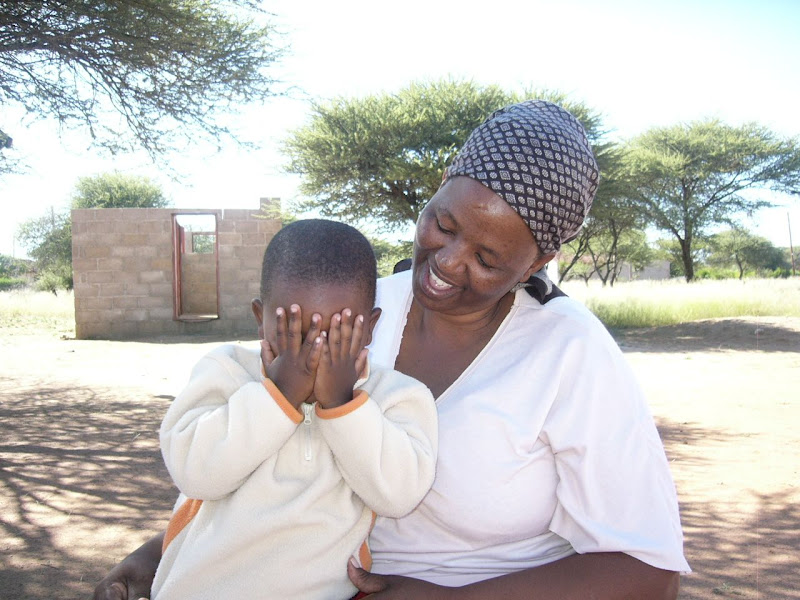
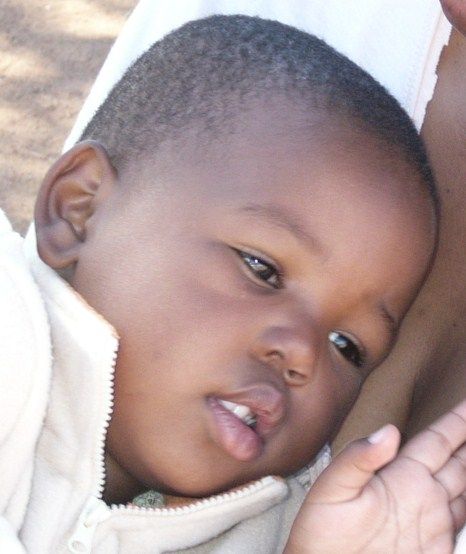
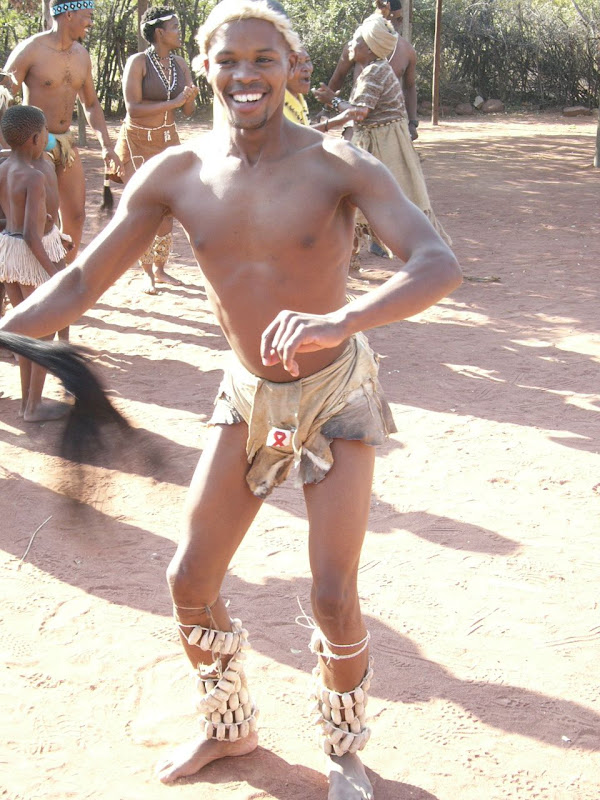
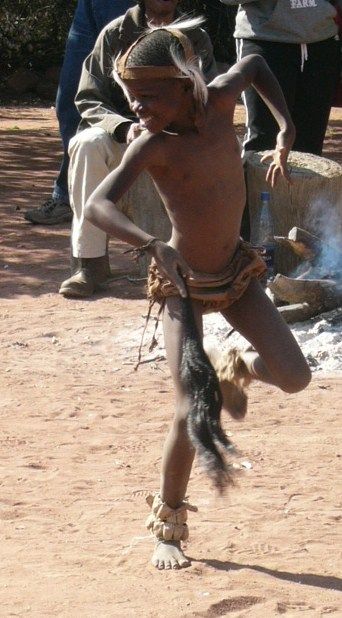
Since my internet time is limited, I can't upload as many pictures as I would like, but here are a few:
The boy who lives next to our training site:
Some dancers from a performance we went to:
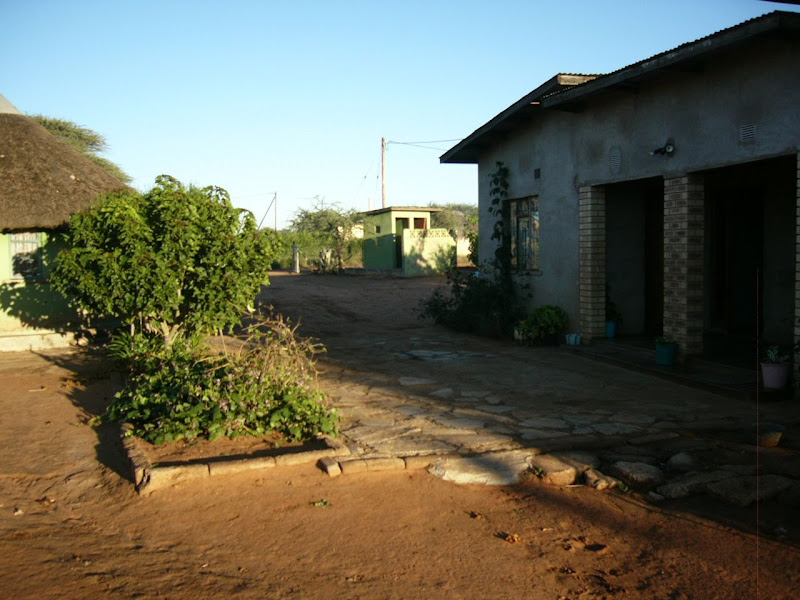
My home:
Subscribe to:
Posts (Atom)


